SAMPLE ARTICLE — fictional development copy, not a researched or published report.
A scarce input
This sample examines a scarce input in the context of technology. The practical question is which decisions become possible when the constraint is described clearly. A useful inquiry identifies an actor, a choice and the evidence that would change that choice.
The next step would be to test this argument against specific institutions and competing explanations. This paragraph is deliberately illustrative; it demonstrates the reading flow and heading outline without presenting invented reporting as fact.
From capacity to capability
This sample examines from capacity to capability in the context of technology. The practical question is which decisions become possible when the constraint is described clearly. A useful inquiry identifies an actor, a choice and the evidence that would change that choice.
The next step would be to test this argument against specific institutions and competing explanations. This paragraph is deliberately illustrative; it demonstrates the reading flow and heading outline without presenting invented reporting as fact.
The institutional choice
This sample examines the institutional choice in the context of technology. The practical question is which decisions become possible when the constraint is described clearly. A useful inquiry identifies an actor, a choice and the evidence that would change that choice.
The next step would be to test this argument against specific institutions and competing explanations. This paragraph is deliberately illustrative; it demonstrates the reading flow and heading outline without presenting invented reporting as fact.
A useful instrument makes a consequential choice easier to see. This is fictional sample prose for testing the blockquote style.
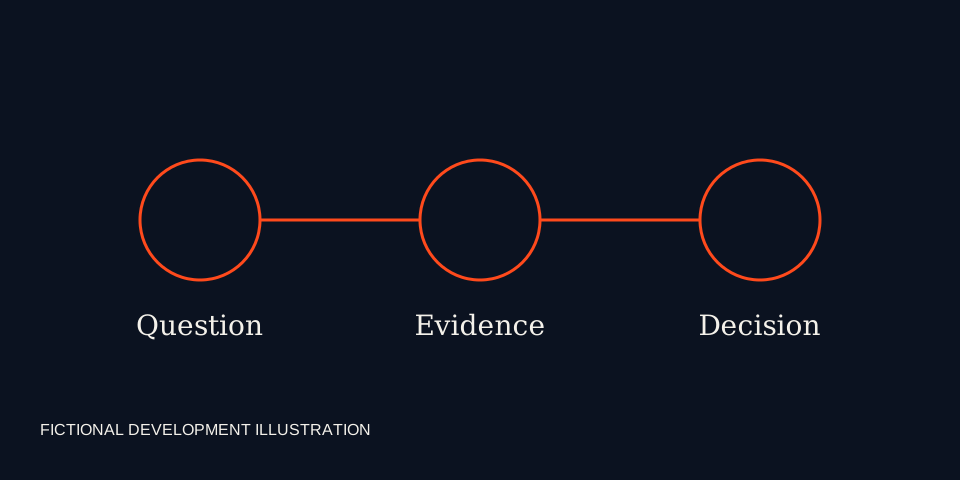
A short list can separate the stages of an inquiry:
- Identify the decision and its owner.
- Describe the constraint in concrete terms.
- Ask what evidence would change the next step.
A second list tests nesting:
- Infrastructure
- Capacity and access
- Maintenance and continuity
- Institutions
- Responsibility and incentives
The table below uses fictional examples, not measured data.1
| Question | Illustrative constraint | Possible next step |
|---|---|---|
| Can the team experiment? | Access to a shared instrument | Reserve a small test window |
| Can the result be verified? | Evidence spread across teams | Assign a verification owner |
| Can a choice be executed? | Unclear responsibility | Name the decision-maker |
The reading column also supports bold emphasis, italic emphasis, and inline code without changing its overall rhythm.
Footnotes
-
This footnote is development copy. Its back-reference returns to the reference in the article body. ↩